
Creating a Montessori bedroom setup isn’t just about aesthetics; it’s about empowering your child to thrive independently. Imagine a space with low bed frames, open shelving, and child-sized furniture that encourages exploration and responsibility. Each element is thoughtfully chosen to enhance your child’s autonomy while promoting a sense of ownership. Intrigued by how these setups can transform your child’s space and support their growth? Let’s explore some inspiring ideas that could redefine their environment.
Low Bed Frame for Easy Access
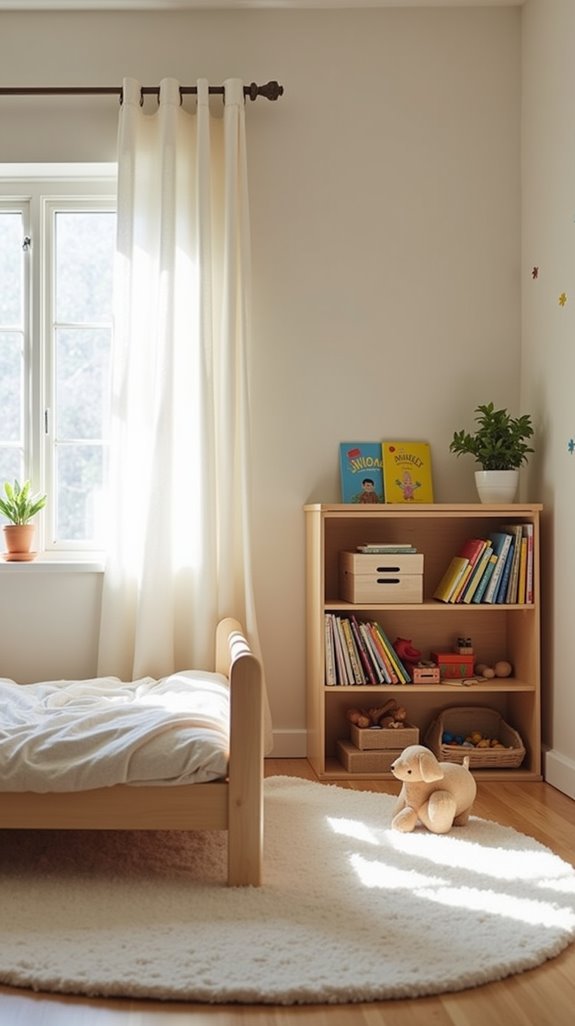
When you think about creating a Montessori bedroom, one essential element that can’t be overlooked is a low bed frame, as it provides children with easy access while promoting their independence.
A low bed frame allows your child to climb in and out without assistance, fostering both confidence and autonomy. This design encourages them to choose their sleep space freely, supporting their decision-making skills.
Additionally, with a low bed, you’re creating a cozy, inviting atmosphere that feels safe and secure. Embracing this key feature in your Montessori bedroom sets the foundation for nurturing a sense of responsibility and self-sufficiency in your child.
Open Shelving Units for Toy Organization
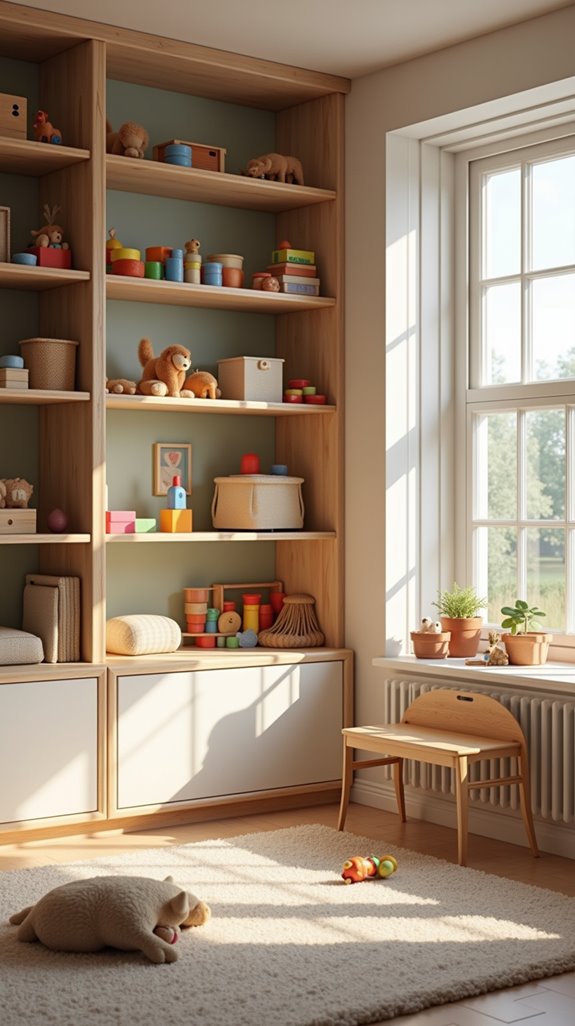
Open shelving units are a game-changer when it comes to organizing your child’s toys and belongings in a Montessori bedroom.
These units not only promote accessibility but also encourage independence and responsibility. When your child can easily see and reach their toys, they’re more likely to engage with them.
Consider these benefits:
- Promotes tidy play: Your child learns to clean up after themselves.
- Encourages choice: They can freely select what interests them.
- Supports learning: Displays items for educational play.
- Enhances decor: Stylishly fills your space while teaching organization skills.
Open shelving truly transforms the bedroom experience!
Child-Sized Furniture for Comfort
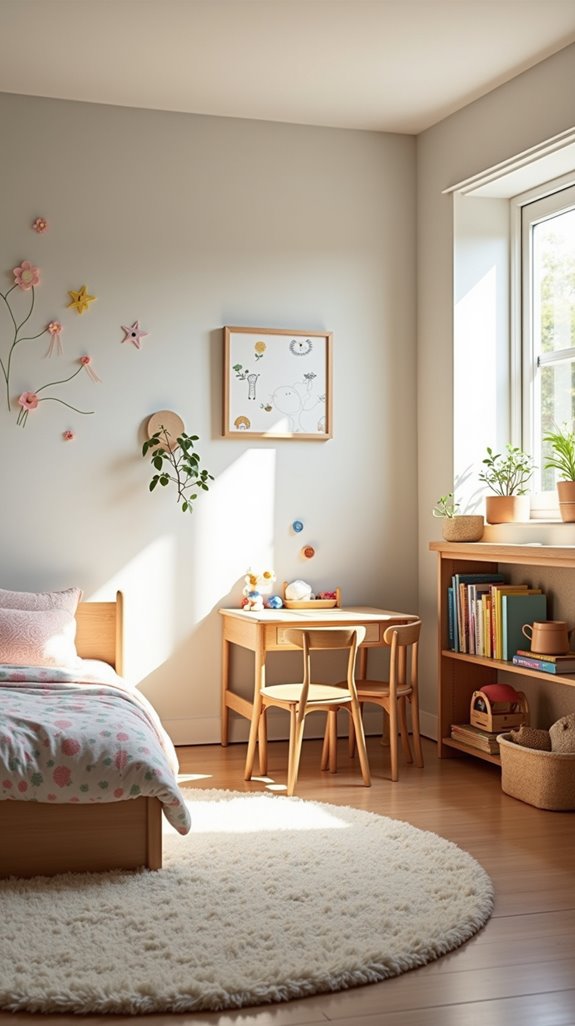
Imagine a cozy space where your child feels completely at ease, surrounded by furniture designed just for them.
Child-sized furniture promotes comfort and independence, allowing your little one to explore their environment with confidence. A low table and chair set invite creativity, while a small bookshelf encourages a love for reading.
When everything’s within reach, your child can easily navigate their room, fostering a sense of ownership. As they sit at their own table, they’ll feel empowered, making choices that reflect their unique personality.
Adopting this mindful approach to design transforms their bedroom into a sanctuary of independence and comfort.
Montessori-Style Wardrobe for Independence
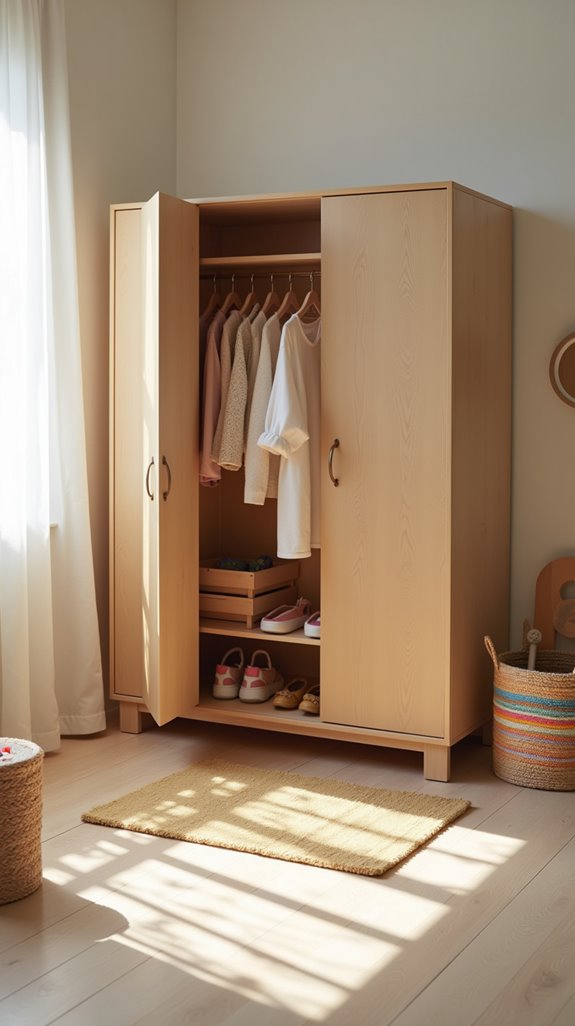
A Montessori-style wardrobe takes independence to a whole new level for your child, providing an accessible space where they can confidently choose their outfits.
This self-sufficient setup encourages decision-making and boosts their self-esteem.
Consider these essential elements when creating the perfect wardrobe:
- Open shelving to display clothes
- Hooks at their height for easy access
- A full-length mirror for outfit checks
- Baskets or bins for accessories
Reading Nook With Accessible Bookshelves
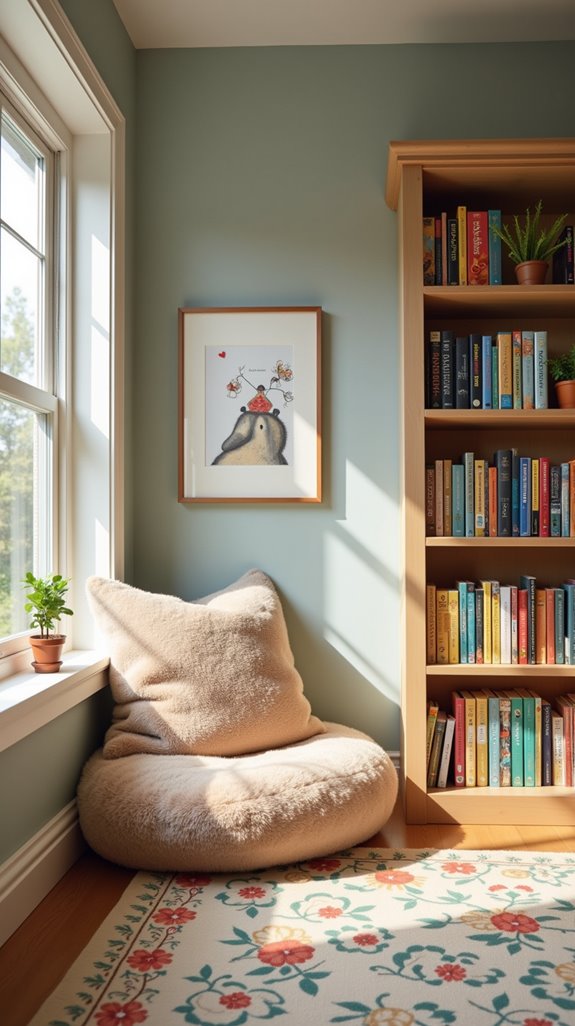
Creating a reading nook with accessible bookshelves not only cultivates a love for literature but also empowers your child to explore their imagination independently.
Picture a cozy corner, complete with soft cushions and enchanting decor, inviting your child to immerse themselves in their favorite stories.
Position low shelves within reach, stocked with an array of colorful books tailored to their interests. This setup encourages choice and nurtures a sense of responsibility, as they can curate their reading selections.
With easy access, your child becomes the master of their literary journey, fostering confidence and autonomy while igniting a passion for reading that lasts a lifetime.
Visual Routine Chart for Daily Tasks
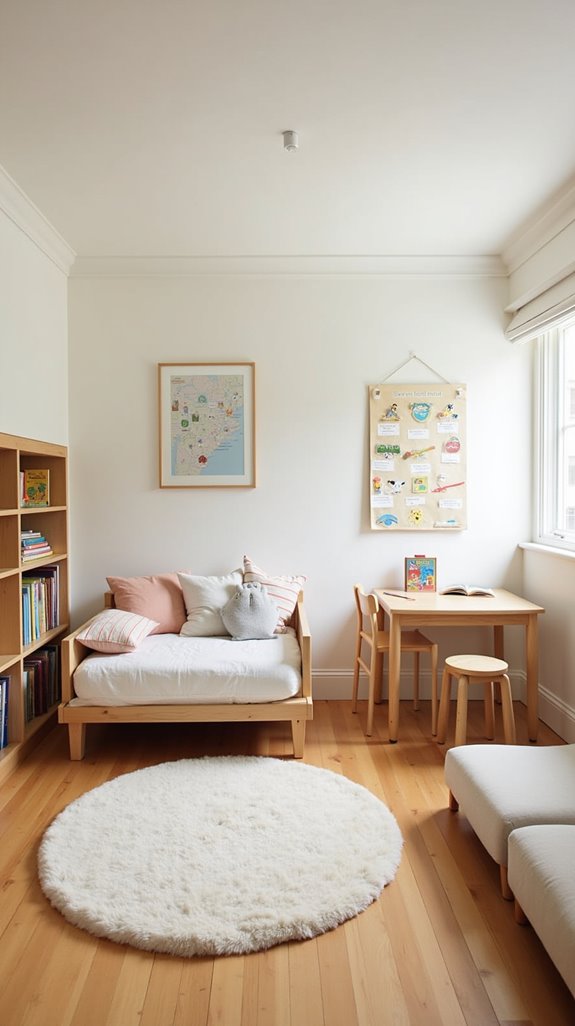
Establishing a visual routine chart for daily tasks transforms chaos into clarity, providing your child with a tangible guide to navigate their day.
It’s a simple yet effective tool that fosters independence and responsibility. Consider incorporating pictures alongside words to make it engaging and easy to follow.
Here’s what to include:
- Morning wake-up routine
- Dress and personal hygiene steps
- Daily chores and responsibilities
- Evening wind-down activities
With this chart in place, your child can visually track progress, gain confidence, and develop self-discipline.
It’s an empowering way to help them manage their time and tasks independently, setting them up for success.
Natural Light With Window Seats
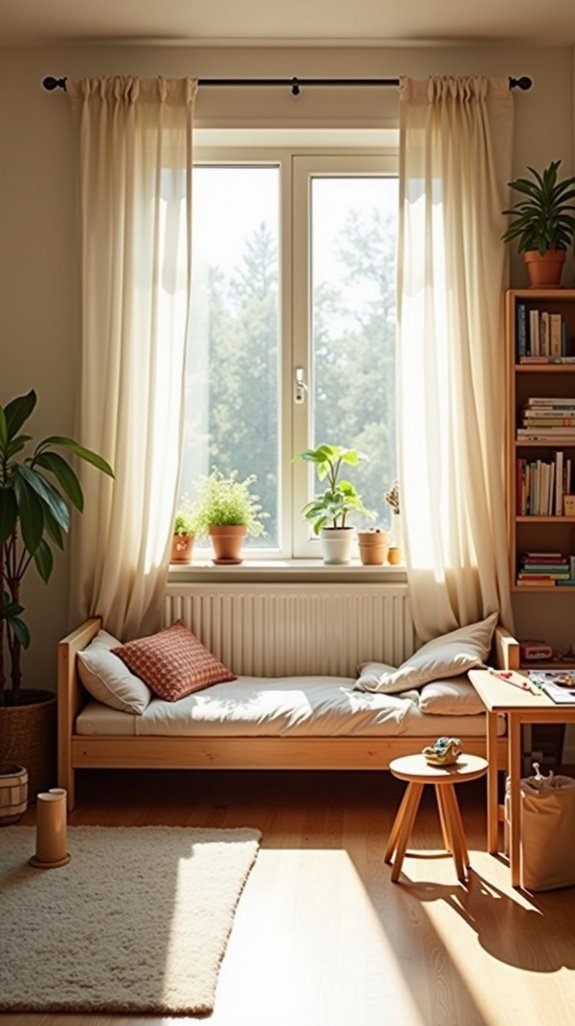
How can you harness the beauty of natural light to elevate your child’s Montessori bedroom? Consider adding a cozy window seat that invites your child to soak in the sunlight.
This special nook not only provides a perfect spot for reading or contemplation but also encourages independence, as they can access it whenever they wish.
By maximizing window space and positioning the seat strategically, you create an atmosphere filled with warmth and inspiration.
Natural light boosts mood and energy, transforming your child’s room into a nurturing environment that fosters creativity and focus.
Embrace these radiant rays for a brighter, more inviting space!
Soft Play Area for Exploration
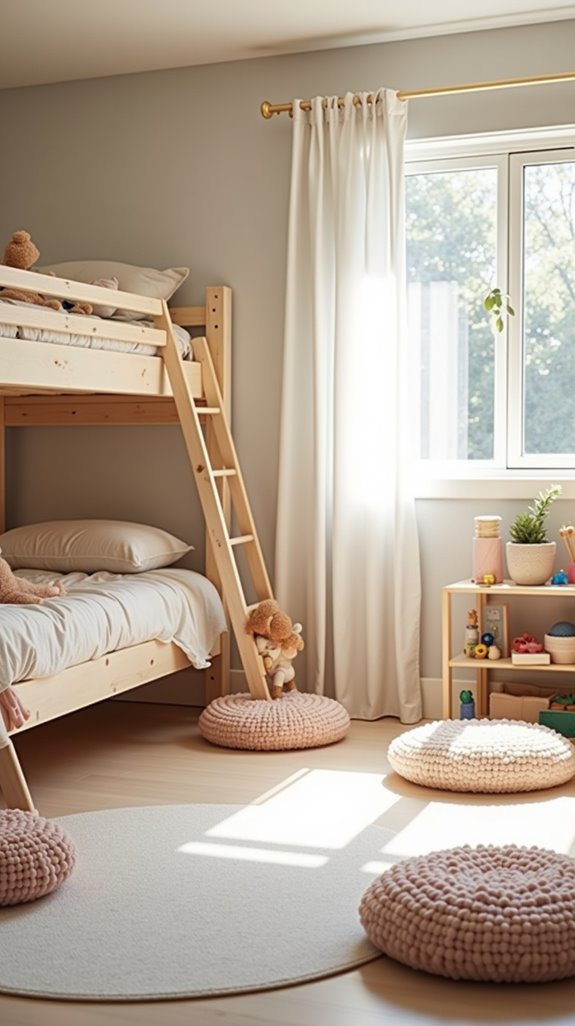
A soft play area can be the heart of a Montessori bedroom, inviting your child to explore freely and safely. This cozy space encourages movement, creativity, and physical development.
Adding elements that inspire active play can enhance your child’s learning experience. Consider incorporating:
- Soft mats or foam tiles for safe landings
- Plush cushions for climbing and lounging
- A variety of age-appropriate toys that encourage imaginative play
- Low climbing structures for developing coordination
These features promote independence and foster confidence as your little one navigates their environment, allowing them to learn through exploration in a gentle, supportive setting.
DIY Art Station for Creative Expression
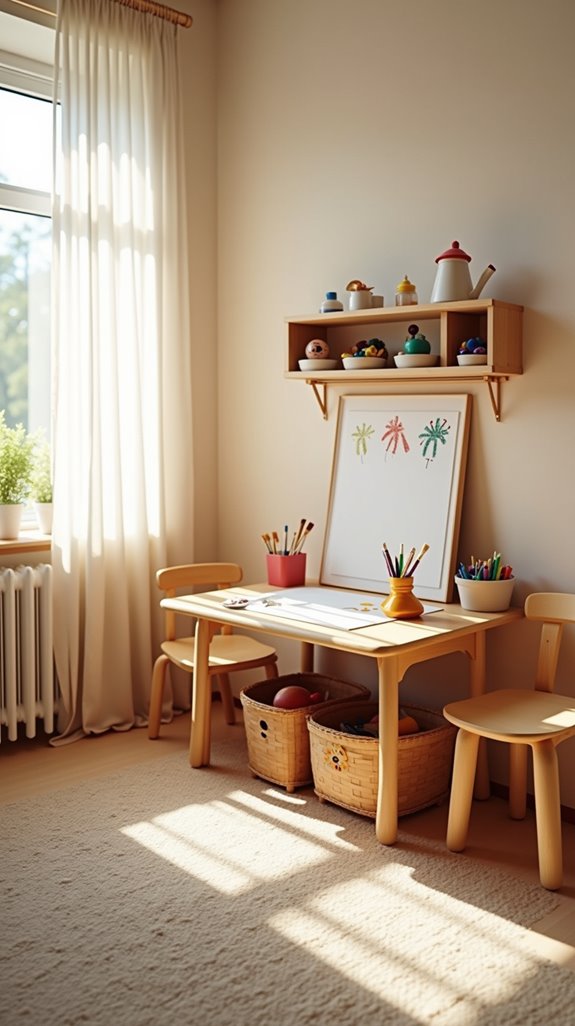
An inviting DIY art station transforms a corner of your child’s bedroom into a vibrant hub of creativity and self-expression. Use a small table or easel at their height, stocked with supplies like crayons, paints, and paper.
Encourage organization by adding labeled bins for easy access. Incorporate inspiration, like colorful artwork or DIY mood boards, to ignite their imagination. Don’t forget an apron to keep their clothes clean!
Floor Cushions for Relaxation
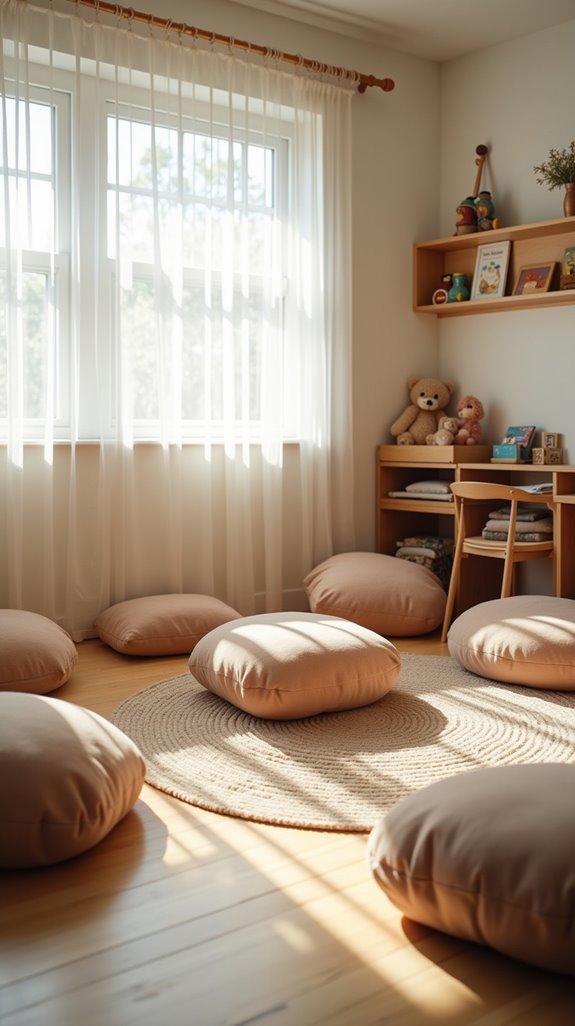
Creating a cozy nook with floor cushions can invigorate your child’s bedroom, transforming it into a haven of relaxation and tranquility.
These cushions invite your little one to unwind, read, or simply reflect. Consider these benefits:
- Encourages Comfort: Soft materials create a welcoming space for relaxation.
- Promotes Independence: Kids can easily arrange their own cushions as they please.
- Versatile Use: Perfect for quiet time, story time, or creative activities.
- Aesthetic Appeal: Colorful cushions can brighten up the room and spark joy.
Personalized Name Tags for Belongings
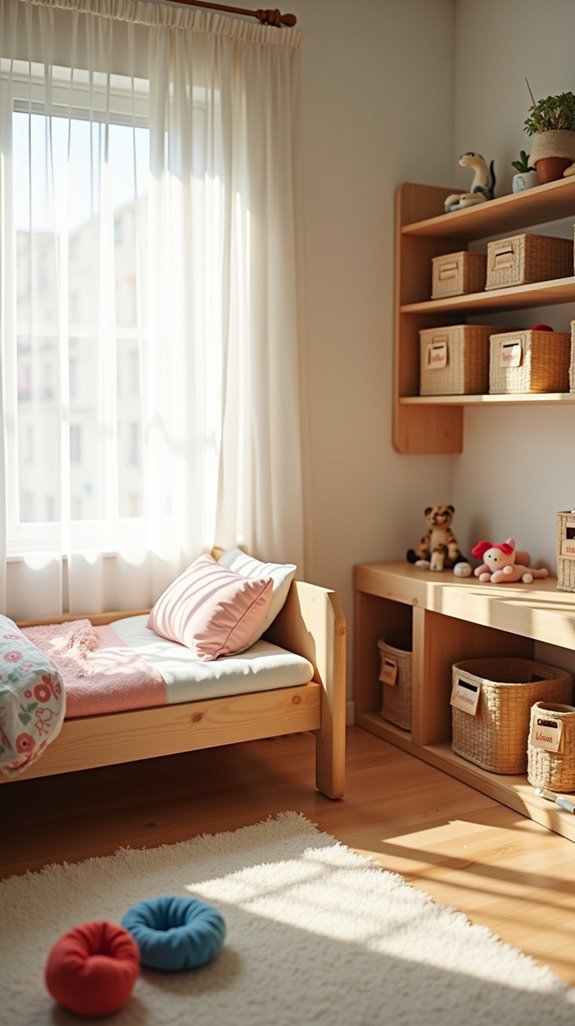
Incorporating personalized name tags for belongings adds a touch of ownership and individuality to your child’s Montessori-inspired space. These name tags not only make it easy for your little one to identify their items but also instill a sense of responsibility and pride.
Choose bright colors and fun fonts that reflect their personality, turning ordinary objects like toy bins, books, and even clothes into cherished possessions. As kids learn to care for their belongings and understand the concept of personal space, they’ll gain independence and confidence, making their environment feel truly like theirs.
It’s a small touch with a big impact!
Climbing Wall for Physical Development
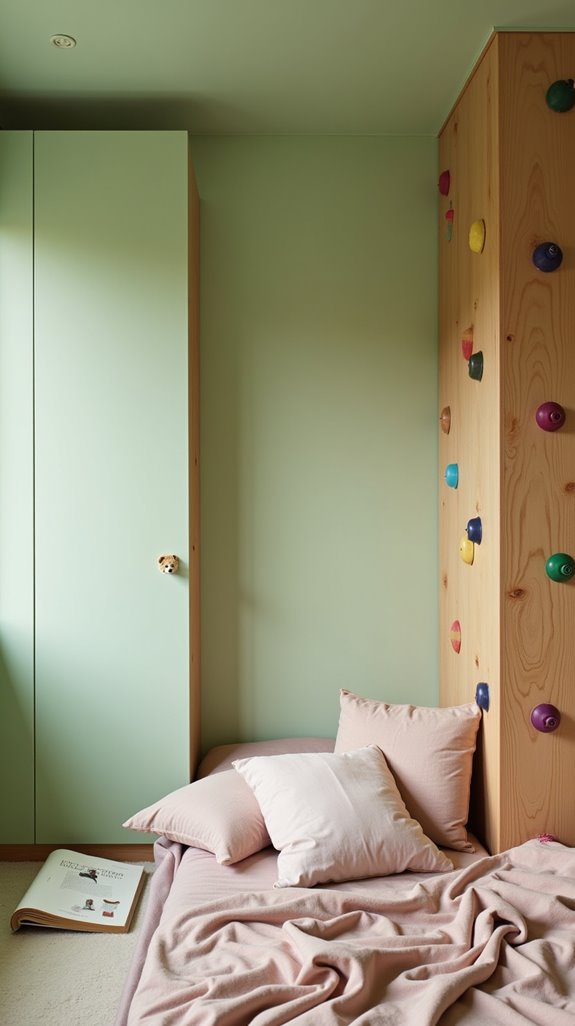
A climbing wall can transform your child’s Montessori bedroom into an exhilarating hub for physical development and play. It encourages strength, balance, and coordination, helping your little one build confidence through active play.
Consider the following benefits of adding a climbing wall:
- Enhances gross motor skills: Climbing promotes muscle development and spatial awareness.
- Boosts confidence: Achieving climbing goals empowers children to take risks.
- Encourages problem-solving: Charting routes fosters critical thinking and adaptability.
- Offers endless fun: It creates an interactive space that keeps kids engaged for hours.
With a climbing wall, you’re setting the stage for lifelong physical health and exploration!
Minimalist Decor for Focused Play
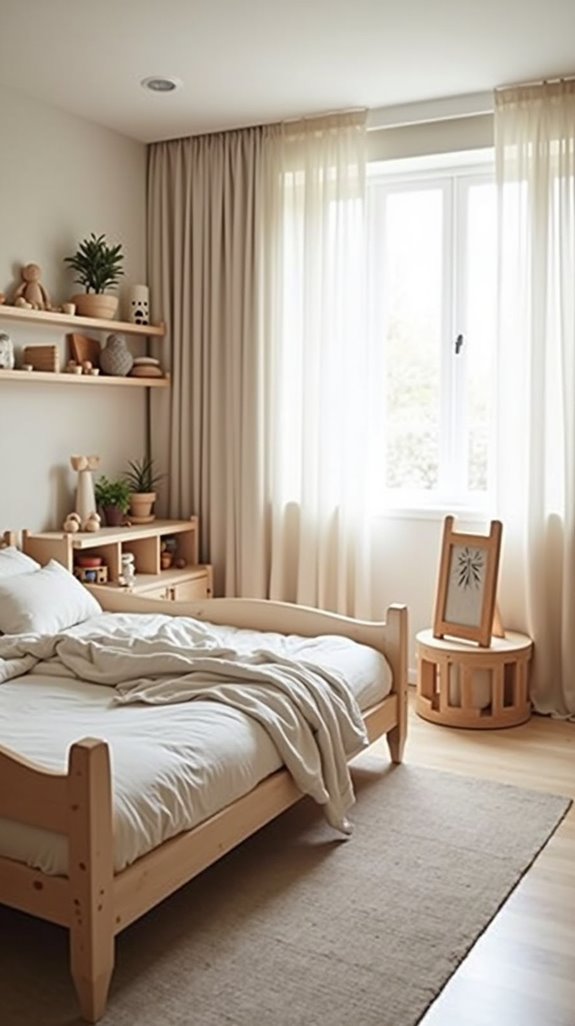
After your child has spent time honing their skills on the climbing wall, you might want to think about how their environment affects their playtime experience.
Embrace a minimalist decor style that reduces distractions and promotes focused play. By keeping surfaces clear and opting for simple, functional furniture, you create a calming space where imagination can thrive.
Use soft colors and natural materials to enhance tranquility, allowing your child’s creativity to flourish without overwhelming stimuli.
Incorporate a few well-chosen toys that spark interest, fostering independent exploration while ensuring your child feels secure and empowered to engage fully in their play.
Nature-Inspired Theme for Calmness
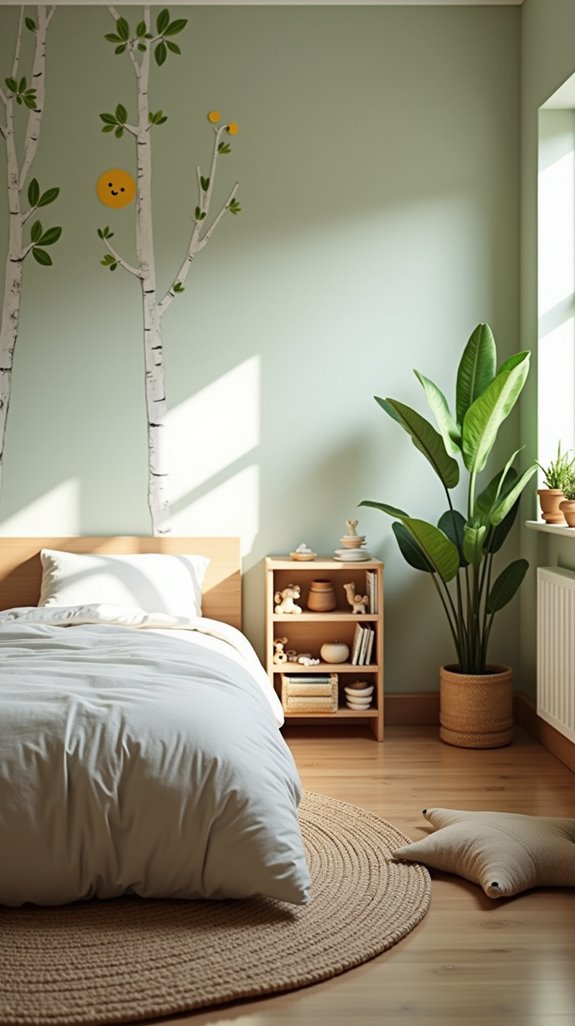
Creating a nature-inspired bedroom can transform your child’s space into a peaceful sanctuary where calmness reigns. By incorporating natural elements, you encourage relaxation and a connection with the outdoors.
Consider these elements for an inviting atmosphere:
- Soft greens and earthy tones for wall colors
- Natural wood furniture that brings warmth
- Organic cotton bedding for comfort and safety
- Plants or nature-themed décor to enhance tranquility
These features not only foster a peaceful environment but also promote your child’s independence.
A serene space nurtures creativity and focus, helping your little one thrive in their own cozy retreat.
Floor Mirror for Self-Reflection
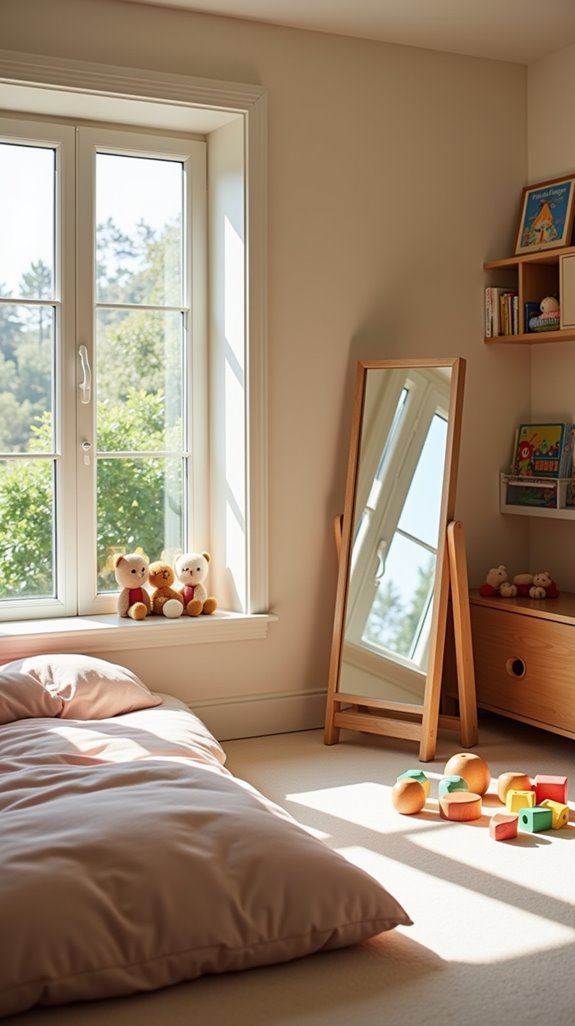
Incorporating a floor mirror into your child’s Montessori bedroom setup can greatly enhance their sense of self-awareness and independence.
This engaging addition allows your little one to explore their reflection, fostering essential skills like coordination and body awareness. As they observe themselves, they’ll develop confidence, learning to express emotions and choices through movement and play.
Consider placing the mirror at their eye level, inviting curiosity and self-discovery during daily routines.
Whether they’re dressing up, practicing dance moves, or simply exploring, a floor mirror cultivates a nurturing environment where self-reflection becomes a natural part of their growing journey.
Textured Sensory Wall for Engagement
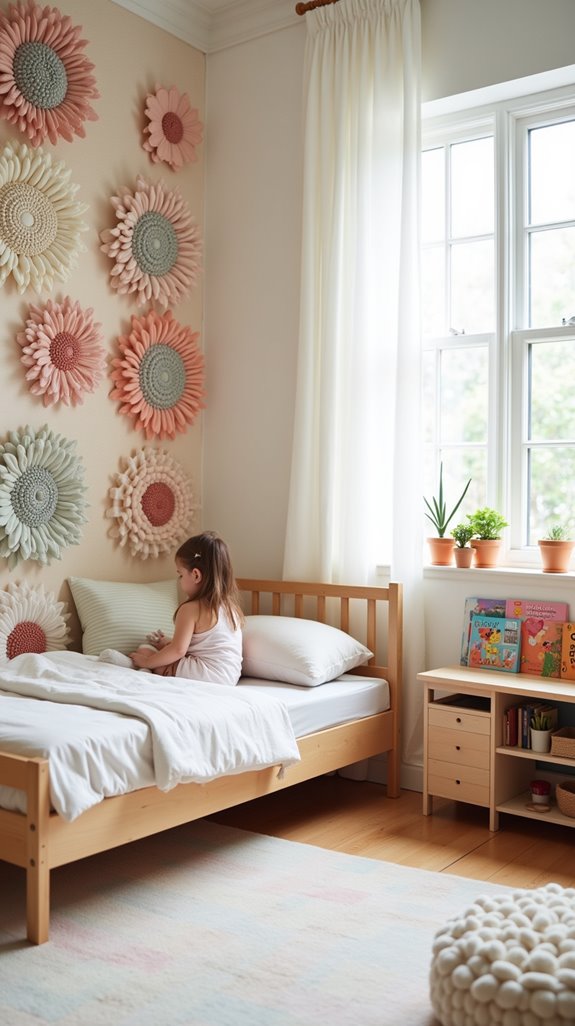
If you want to spark your child’s curiosity and engage their senses, a textured sensory wall can serve as an inspiring and interactive addition to their Montessori bedroom.
This wall invites exploration and promotes tactile learning, allowing your child to discover various textures and materials.
Consider incorporating elements such as:
- Soft, plush fabrics for gentle touches
- Bumpy surfaces like sandpaper for sensory contrast
- Smooth, cool tiles for a revitalizing feel
- Natural materials like wood for grounding experiences
Creating this sensory-rich environment fosters independence, enhances motor skills, and encourages imaginative play, making your child’s space truly inviting and enriching.
Color-Coded Storage Bins for Sorting
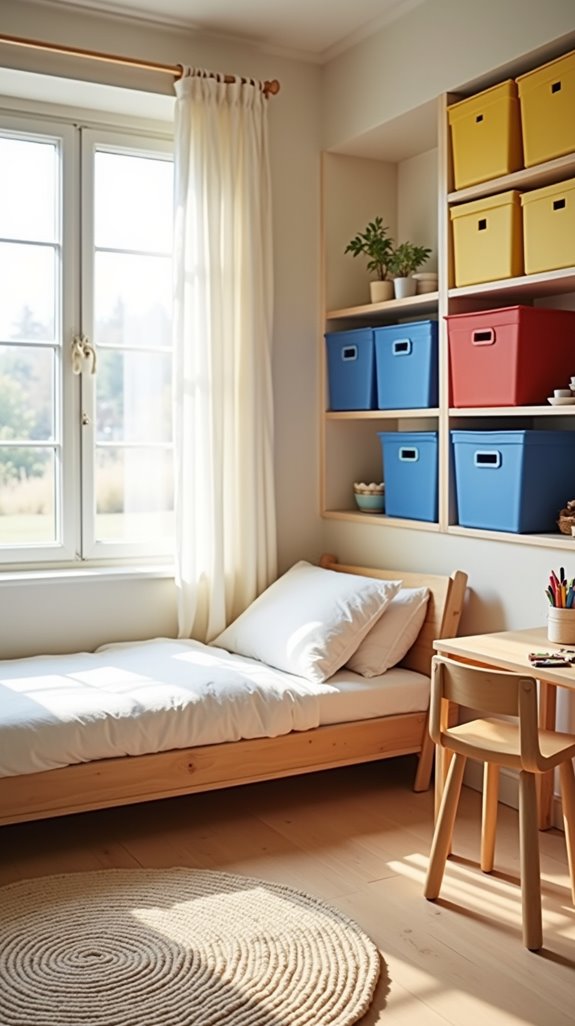
While organizing a child’s room can seem challenging, using color-coded storage bins for sorting offers a practical and visually appealing solution.
These vibrant bins not only make tidying up fun but also teach kids about organization and responsibility. By assigning specific colors to different toys or activities, you help them quickly identify where everything belongs.
This system fosters their independence, allowing them to take charge of their space. Imagine your child proudly returning their toys to the blue bin for blocks and the red one for books.
With delightful colors leading the way, creating order becomes an enjoyable adventure.
Quiet Corner for Mindfulness Activities
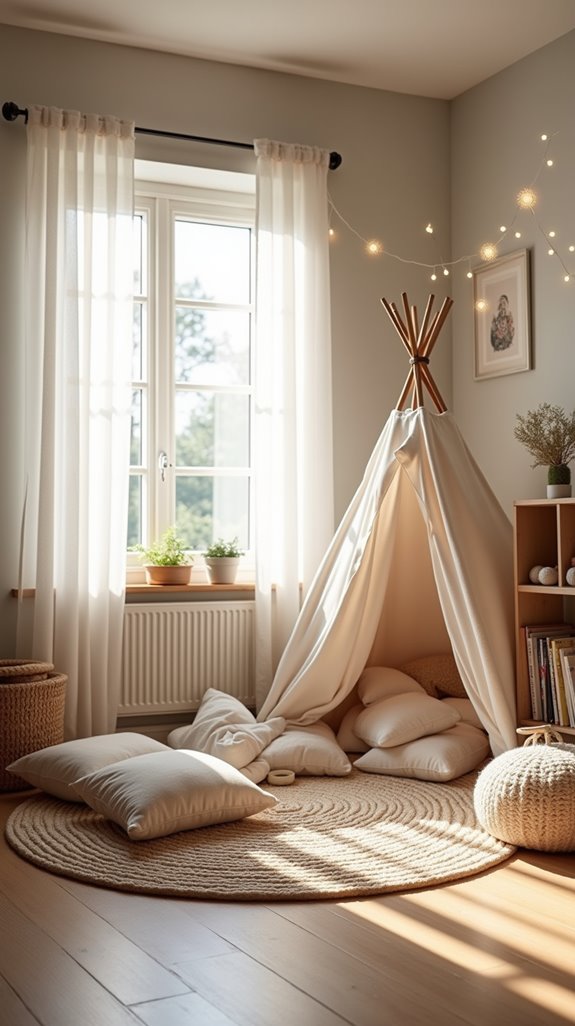
Creating a quiet corner for mindfulness activities can transform a child’s bedroom into a serene space that promotes calm and focus.
This special nook encourages children to explore their emotions and enhance their concentration.
To make it effective, consider incorporating:
- A cozy bean bag chair or floor cushion
- Soft lighting, like fairy lights or a small lamp
- Mindfulness tools, such as journals or calming sensory objects
- A small bookshelf with age-appropriate books on mindfulness
Mobile Hooks for Hanging Essentials
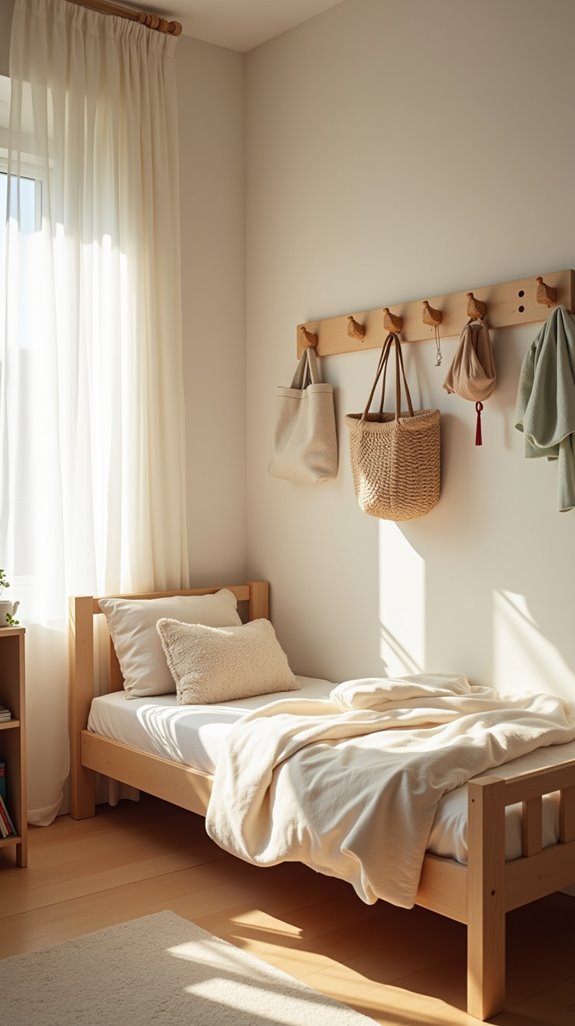
In a Montessori-inspired bedroom, functionality meets creativity through the use of mobile hooks for hanging essentials.
These versatile hooks not only encourage independence but also create an organized and visually appealing space. You can easily adjust their height, allowing your child to reach their backpacks, jackets, or favorite toys without help.
Hang colorful baskets from the hooks to store smaller items, promoting tidiness and responsibility.
Imagine a room where everything has its place, fostering a sense of ownership. With mobile hooks, your child’s bedroom becomes a sanctuary for growth, exploration, and self-reliance, making daily routines a breeze and instilling proud habits.
Personalized Growth Chart for Motivation
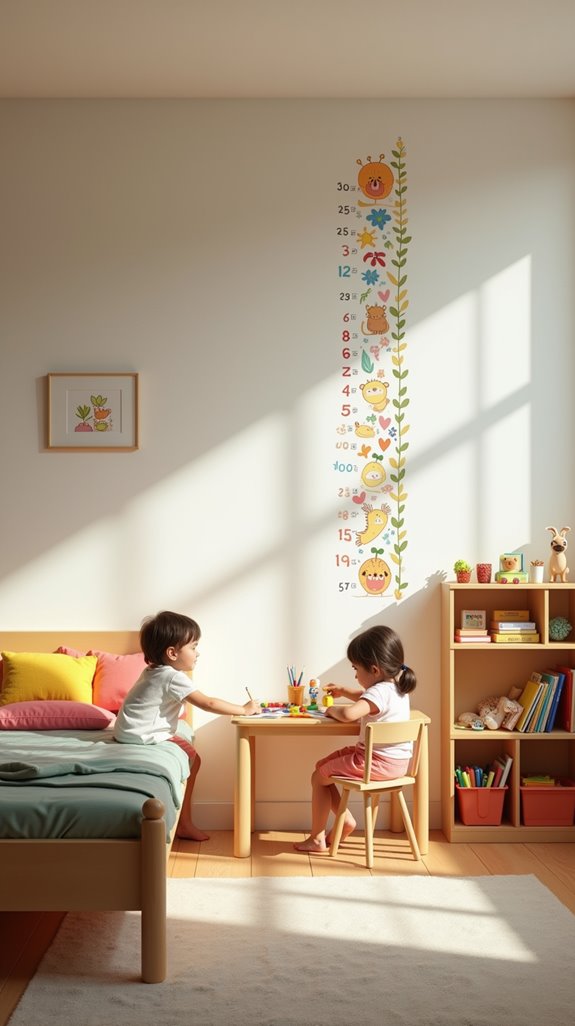
What if you could bring the excitement of growth and achievement right into your child’s bedroom? A personalized growth chart can inspire motivation and pride as your child tracks their height over time.
This unique piece not only decorates their space but also instills a sense of accomplishment. Consider these ideas for your growth chart:
- Customize it with your child’s favorite colors or themes
- Include milestones like birthdays or special achievements
- Use stickers as rewards for personal goals
- Make it a family activity to measure together
With a growth chart, your child’s journey becomes a celebration of independence and personal development!